
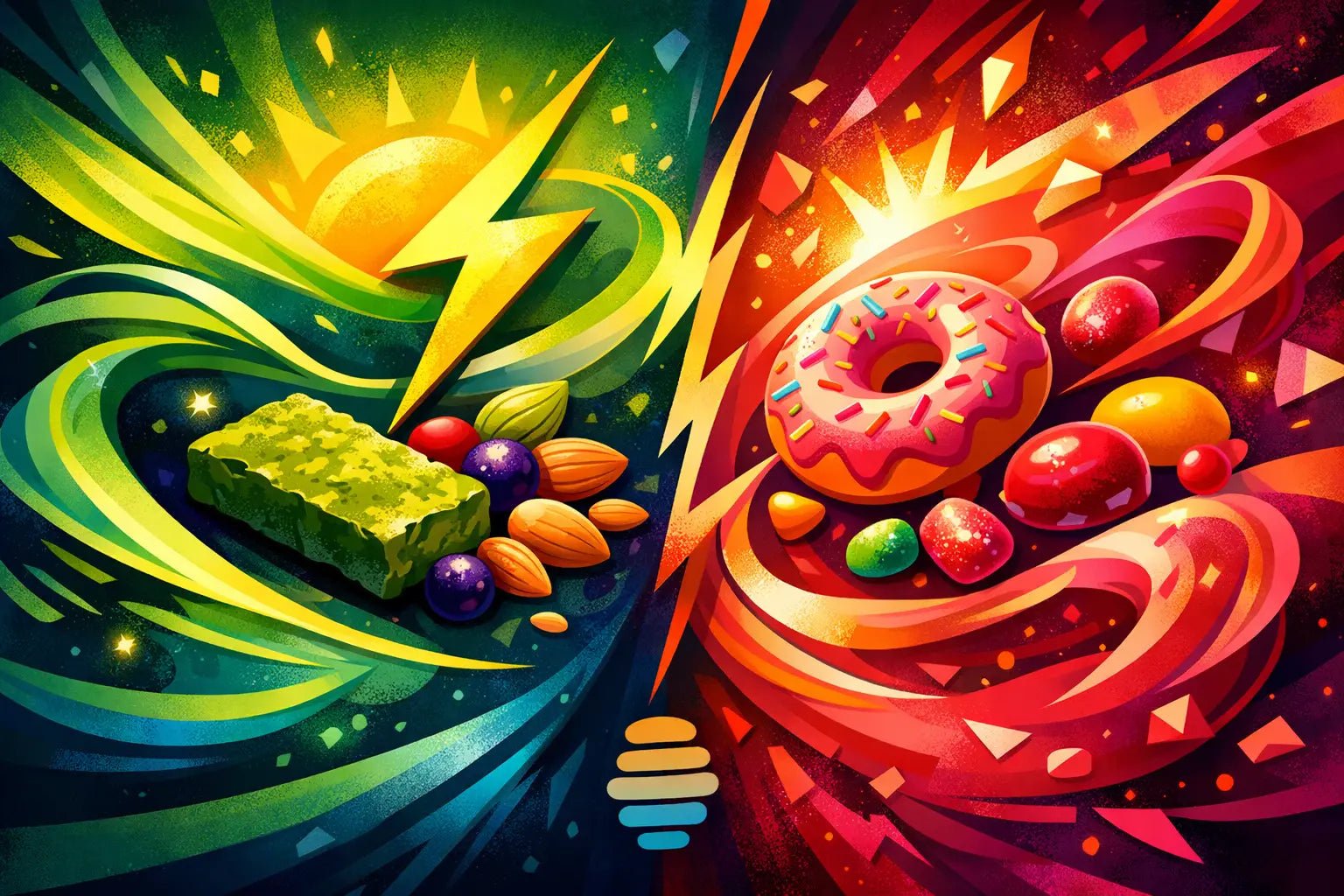
Sustained Energy Snacks vs Sugary Snacks
The difference between a strong finish and a midafternoon crash can be sitting in your snack bag. In the conversation around sustained energy snacks vs sugary snacks, the real question is not whether sugar is “bad.” It is whether your snack gives your body enough lasting fuel for the trail, the training session, the commute, or the packed calendar ahead.
A bright, sweet snack can absolutely have a place. Quick carbohydrates are useful when you need immediate energy. But when every snack is built around added sugars and refined starches, the burst can fade as fast as it arrives. For active, full-life people, a better approach is choosing food that brings energy with more staying power.
Why Sugary Snacks Can Leave You Wanting More
Sugary snacks are designed to be easy to eat and hard to stop eating. A cookie, candy bar, sweetened pastry, or some flavored snack packs can deliver a fast hit of carbohydrates with very little fiber, protein, or fat alongside them. That means they move through your system quickly.
You may feel energized for a short window, especially if you were hungry to begin with. Then comes the familiar pattern: your concentration starts drifting, your stomach is ready for more, and the vending machine looks more tempting than it did 45 minutes ago.
This does not mean naturally sweet foods are off-limits. Fruit contains natural sugars, but it also brings water, fiber, and micronutrients. The bigger issue is the overall makeup of a snack. A food made mostly of added sugar may satisfy a craving, while a more balanced snack is more likely to support a busy afternoon or a long stretch outside.
Fast Fuel Has a Time and Place
There is a trade-off worth understanding. Quick sugar can be useful during intense exercise, particularly when you are already moving hard and need carbohydrates that are easy to digest. A runner near the end of a long race or a cyclist climbing for hours has different needs than someone heading into a three-hour meeting.
For everyday energy, though, relying on rapid sugar alone can make snack time feel like a loop: spike, slump, repeat. The goal is not perfection. It is matching the fuel to the moment.
Sustained Energy Snacks vs Sugary Snacks: What Changes?
Sustained energy snacks typically pair carbohydrates with one or more ingredients that slow the pace and improve satisfaction, such as fiber, protein, and nourishing fats. Carbohydrates still matter. They are a primary energy source for your muscles and brain. The difference is that they are not working alone.
Fiber can help a snack feel more filling and can moderate how quickly it is digested. Protein supports satiety and helps make a snack feel like real fuel rather than a temporary distraction. Fats from ingredients like nuts and seeds add richness and can help extend a snack’s staying power.
Think of it like packing for a tropical hike. A single bottle of water is useful, but it is not the whole plan. You also bring food, sun protection, a route, and enough supplies to keep going when the terrain changes. A balanced snack gives your body more than one tool for the journey.
That balance can look different from person to person. Someone with a sensitive stomach before a workout may prefer a lighter, simpler snack. Someone working through a long afternoon may do well with a bar that includes carbohydrates, plant-based ingredients, and protein. Your appetite, activity level, and timing all matter.
What to Look for in a Snack That Lasts
The ingredient list tells a more useful story than the front-of-package promises. Look first for recognizable foods that you would expect to find in a kitchen: fruits, nuts, seeds, oats, legumes, cocoa, and thoughtfully sourced plant ingredients. These are not magic ingredients, but they can contribute texture, flavor, and nutritional depth.
Next, consider the balance. A snack with carbohydrates plus fiber, protein, or healthy fats is often a better candidate for sustained energy than one led by syrups and added sugars. You do not need to turn snack shopping into a math assignment. A quick scan can go a long way.
Pay attention to added sugar, but keep context in mind. A snack containing some sugar is not automatically a poor choice, particularly if it is part of a balanced recipe and fits your activity. What matters is whether sugar is doing all the heavy lifting. If the snack is mostly sweetener with little else, it may be better saved for a treat than trusted as all-day fuel.
Flavor matters, too. The most nutritious snack in your backpack does not help much if you never want to eat it. Seek flavors you genuinely enjoy, whether that means bright mango, creamy banana and cocoa, a little ginger zing, or a satisfying tropical crunch. Great fuel should feel like a small moment of adventure, not a chore.
Match Your Snack to the Moment
Before a workout, a snack with easy-to-digest carbohydrates can help you head out with energy without feeling overly full. If you have more time before your run, hike, or strength session, adding some protein and fat may help carry you farther.
During a long outdoor effort, portability and digestion become essential. You need something that can travel well, taste good when you are miles from home, and offer enough substance to keep your energy steady. In that setting, a little sweetness can be welcome, especially when it comes with more complete ingredients.
After activity, many people benefit from carbohydrates and protein to refuel. This is also a moment when a convenient bar can earn its spot in your routine, especially when a full meal is not immediately available.
At your desk or between errands, aim for satisfaction. A snack that includes protein, fiber, and real-food ingredients can help bridge the gap to your next meal without turning your afternoon into a search for another sugar hit. Pairing a snack with water or unsweetened coffee or tea can also help you pause and check in with what your body needs.
A Tropical Approach to Everyday Fuel
The most exciting snacks do more than copy the same old peanut butter and chocolate formula. They introduce ingredients with a real sense of place. Pejibaye, a nutrient-dense fruit enjoyed in Central and South America, brings a distinctive tropical character to the conversation about functional food.
At PEJI BAR, pejibaye is paired with real-food ingredients to create portable bars made for movement, from early trailheads to late workdays. The idea is simple: bold flavor and purposeful nourishment can belong in the same wrapper. Choosing thoughtfully sourced ingredients also connects your daily fuel to something bigger, including support for small farmers and tropical rainforest preservation.
That does not mean one bar needs to solve every nutrition need. A snack is part of a wider pattern that includes meals, hydration, sleep, and recovery. But choosing a bar that tastes vibrant and offers more than empty sweetness can make the healthier choice feel far more natural.
Build a Snack Routine You Can Actually Keep
The best snack strategy is not a strict set of rules. It is a dependable rhythm that works when life gets loud. Keep a few balanced options in the places where hunger catches you off guard: your work bag, car, gym tote, or hiking pack. When you have real fuel within reach, it is easier to make a choice that supports your plans.
Leave room for the sweet things you love, too. Enjoying a dessert or a candy snack on purpose is different from depending on it to power every demanding hour. Food should bring pleasure as well as energy.
When you reach for your next snack, ask one simple question: will this carry me into what is next, or only get me through the next few minutes? Choose the option that lets you keep moving, stay present, and enjoy the adventure still ahead.