
A Guide to Tropical Fruit Nutrition for Real Energy
A ripe mango on a hot trail day, a bright spoonful of passion fruit at breakfast, or the savory richness of pejibaye after a workout: tropical fruit brings more than vacation flavor. This guide to tropical fruit nutrition is for people who want portable, real-food energy and a clearer way to choose snacks that can keep up with early runs, long meetings, and weekends outside.
Tropical fruit is not one nutritional category. Some fruits are juicy and light. Others, including plantains, coconut, and pejibaye, are more substantial sources of carbohydrate and fat. The useful question is not whether tropical fruit is “good” or “bad.” It is which fruit fits the moment, what portion works for you, and what you pair it with.
Why tropical fruit feels like natural fuel
Most tropical fruits deliver carbohydrates, water, fiber, and a lineup of micronutrients in a format that tastes like actual food. Their naturally occurring sugars can offer quick energy, especially before activity or when an afternoon slump hits. Fiber helps slow the experience compared with candy or a sweetened drink, though the effect varies by fruit and by whether it is whole, dried, blended, or juiced.
Think of a fresh pineapple ring or papaya slice as quick, refreshing fuel. Think of a banana, plantain, or pejibaye as more grounding. These starchier fruits can feel more satisfying because they bring more carbohydrate per bite and, in some cases, more fiber or fat. That difference matters when your next meal is hours away.
Fruit also earns its place through vitamins, minerals, and plant compounds. Mango and papaya supply carotenoids, the colorful pigments that can be converted to vitamin A in the body. Guava and citrusy fruits can be especially rich in vitamin C. Bananas contribute potassium, a mineral involved in normal muscle and nerve function. No single fruit needs to carry the whole nutrition plan, but variety makes the plate work harder.
A guide to tropical fruit nutrition by fruit type
Juicy fruits: hydration with a bright energy lift
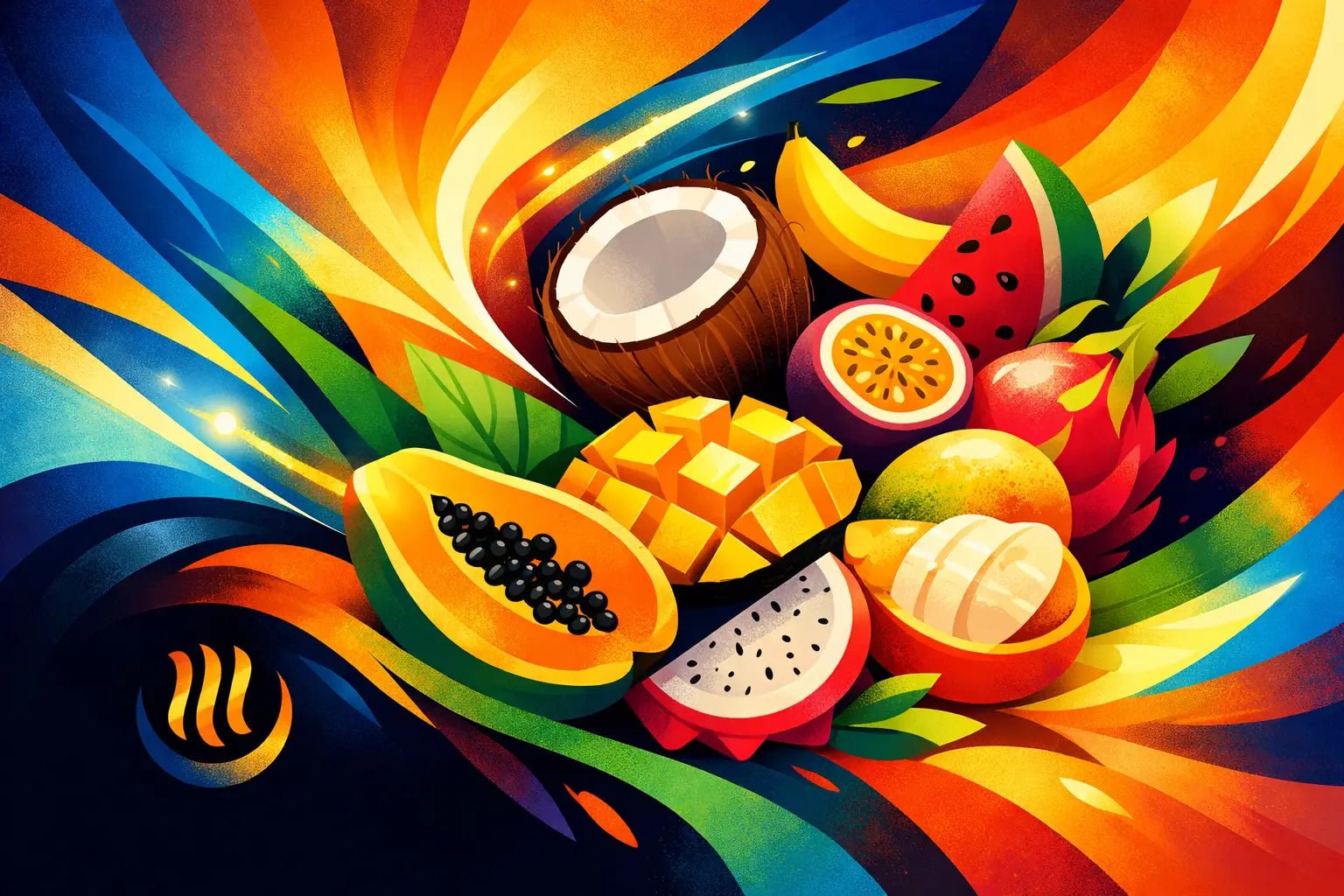
Pineapple, watermelon, papaya, mango, dragon fruit, lychee, and passion fruit are often high in water, which makes them refreshing in warm weather. Their carbohydrate content ranges widely, but they generally work well as a snack component, a pre-workout bite, or a flavorful addition to yogurt and oats.
Passion fruit is a standout for its crunchy seeds and fiber. Papaya is soft, lightly sweet, and a good source of carotenoids. Mango delivers a fuller, honeyed flavor with meaningful carbohydrate for active days. Fresh fruit is usually the most filling choice because it includes water and intact structure. Juice can be convenient, but it is easier to drink a large amount quickly and leaves out much of the fiber.
Starchy fruits: longer-lasting adventure fuel
Bananas and plantains belong in a different lane. They are less about hydration and more about practical carbohydrate. A banana before a run can be easy to digest for many people. Cooked plantains make a satisfying side when you need more substance than a piece of fresh fruit can provide.
Pejibaye, also called peach palm fruit, is another tropical fruit worth knowing. Popular in Central and South America, it is traditionally cooked before eating and has a dense, savory-sweet character that is closer to a nourishing staple than a watery snack. Its exact nutrition varies by variety and preparation, but pejibaye is valued for its energy-providing carbohydrates, fiber, beneficial fats, and colorful carotenoids.
That naturally rich profile is why PEJI BAR puts pejibaye at the center of its tropical superfood bars. It brings a more substantial foundation than the usual fruit-flavored snack, with Costa Rican-inspired flavor built for movement, work, and the miles in between.
Coconut: satisfying, but not a protein shortcut
Coconut is technically a fruit, yet nutritionally it behaves differently from mango or pineapple. Fresh coconut meat and unsweetened coconut products supply fat, which can make a snack feel satisfying. They are also calorie-dense, so a little goes a long way.
Coconut water is a separate choice. It is mostly fluid with some carbohydrate and electrolytes, particularly potassium. It can be refreshing after sweating, but it is not a replacement for a balanced meal or a sports drink in every situation. For very long, hot, high-sweat sessions, your sodium needs may be higher than coconut water provides.
The real key: pair fruit with protein and fat
Fruit alone can be exactly right when you need fast energy. Before a short workout, a banana or a few bites of mango may be all you want. But for a workday snack, a hike, or recovery after training, pairing tropical fruit with protein and fat usually creates more staying power.
Try fruit with Greek yogurt, nuts, seeds, nut butter, cottage cheese, or a clean ingredient energy bar with a meaningful protein source. The fruit contributes accessible carbohydrate and flavor; protein supports muscle repair and helps make the snack more filling; fats can extend satisfaction. You do not need to engineer every bite. You just want a snack that matches the demand ahead.
This is especially useful with dried tropical fruit. Dried mango, pineapple, banana chips, and coconut are compact and trail-friendly, but drying concentrates their sugars and calories into a small serving. Some versions also contain added sugar or oil. Pair them with nuts or protein, check the ingredient list, and treat a handful as a deliberate snack rather than an endless desk-side nibble.
Choosing the right tropical fruit for the moment
For a quick pre-workout boost, choose something simple and easy to digest, such as banana, mango, or a small serving of pineapple. If you are heading into a long hike or a packed travel day, reach for a more complete snack with fruit-based carbohydrates plus protein and fat. For post-workout recovery, fruit alongside protein is a smart, delicious place to start.
At breakfast, tropical fruit can bring color and momentum to oats, yogurt, chia pudding, or a smoothie. Just remember that smoothies are easy to overbuild. A blend of fruit juice, several bananas, sweetened yogurt, and syrup can become more dessert than breakfast. Use whole fruit, add protein, and include a source of fat or fiber when you want a steadier meal.
If blood sugar management is part of your health plan, fruit can still fit, but context matters. Whole fruit portions and protein pairings tend to be more useful than juice or heavily sweetened dried fruit. Individual tolerance, medications, and medical guidance should lead the way.
How to shop for tropical fruit without the sugar trap
The tropical aisle can be full of great choices and a few misleading ones. Fresh and frozen fruit are straightforward options with no added sugar. Frozen fruit is especially practical for smoothies and can be picked at peak ripeness.
For packaged options, read beyond the fruit on the front label. Look for fruit, nuts, seeds, and recognizable ingredients. Be cautious with products where sugar, syrup, or refined oils lead the list. “Tropical” is a flavor promise, not a nutrition guarantee.
Portion also deserves a little common sense. A bowl of papaya may feel light; a bag of dried pineapple can disappear before you notice it. Neither is off-limits. One simply asks for a different serving size and a more intentional pairing.
Let variety make your snack routine better
The best tropical fruit habit is not chasing one miracle ingredient. It is building a colorful rotation that makes real nourishment more appealing. Keep bananas for grab-and-go fuel, frozen mango for breakfast, passion fruit or papaya for a change of pace, and a satisfying fruit-and-protein snack for the days that refuse to slow down.
Choose what tastes great, travels well, and supports the way you move through the day. When a snack carries bright tropical flavor, dependable nutrition, and respect for the ecosystems and farming communities behind it, every bite can feel like a small step toward a more energized adventure.